|
|
Corn & Soybean News April,
2007, Volume 7, Issue 5
Corn &
Soybean Newsletter Home Page Printer-Friendly Version (pdf)
Cooperating
Departments: Agricultural Economics, Biosystems and Agricultural Engineering,
Entomology, Plant and Soil Sciences, Plant Pathology Editor:
|

|
In this
Issue: 2. Wireworms 3. Herbicides and replant options |
|
|||||||||||||||||||||||||||||||||||||||||||||||||||||||||||||||||||||||||||||||||||||||||||||||||||||||||||||||||||||||||||||||||||||||||||||||||||
|
Corn
replanting options Chad
Lee and James Herbek, Plant and Soil Sciences The
warm weather in mid-March prompted many producers to plant corn early,
putting those fields at greater risk for injury and stand losses. Every year
farmers in Kentucky are faced with the question of letting a poor stand of
corn remain or removing that corn and planting another field of corn. Temperatures
below 28°F for more than two hours will kill plant growth above the soil. The
growing point of corn will remain below ground until corn has about six fully
emerged leaves (V6 growth stage). Even though the soil surface will help to
protect the growing point from cold temperatures, repeated nights of
temperatures below 28°F will likely cause damage to some growing points. If
corn stands are damaged, then there are several factors that go into deciding
between keeping the existing stand and replanting. Some of these factors
include: 1.)
current stand of corn and expected yield 2.)
replanting date, replanting cost, and expected yield 3.)
hybrid corn seed availability 4.)
herbicide(s) that have a replant restriction 5.)
methods for destroying the existing crop 6.)
insect management changes, if any 7.)
adjustments in soil fertility programs, if any Expected
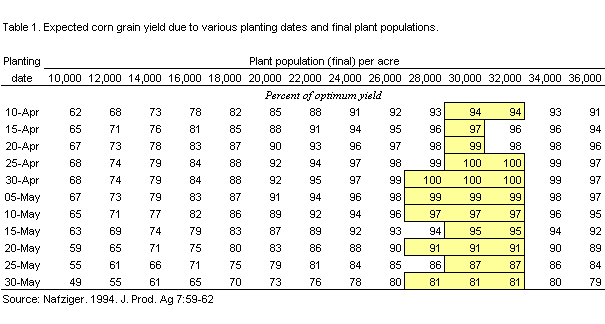
corn yields based on planting date and plant population were estimated for
Illinois in 1994 (Table 1). The information in Table 1 serves as a rough
estimate for well-drained soils in Kentucky. In general, final stands between
27,000 to 33,000 plants per acre provide maximum yield on well-drained soils.
Lower populations would be needed on poorer soils. Table
1 indicates that maximum yield is achieved when corn is planted near the end
of April. Ideal planting dates for western and central Kentucky are closer to
April 17 to April 27 (Table 2). Plantings in mid to late May in western and
central Kentucky will result in close to a 20% yield loss while plantings in
early June will result in nearly 40% yield losses. The
dates in Table 1 and Table 2 can be shifted back seven days for eastern
Kentucky. For example, the ideal planting dates in Table 2 are from April 17
to April 27, while in eastern Kentucky ideal planting dates are closer May 1
to May 7. |
· Temps below 28°F
can damage young corn plants. · Replant decisions usually are not a simple “yes” or “no”. |
|||||||||||||||||||||||||||||||||||||||||||||||||||||||||||||||||||||||||||||||||||||||||||||||||||||||||||||||||||||||||||||||||||||||||||||||||||
|
|
Reprinted from:
Nielsen, R.L. and P. Thomlinson. 2002. Late-planted corn & seeding rates.
URL:
http://www.kingcorn.org/news/articles.02/Delayed_Planting_Populations-0510.html
|
|||||||||||||||||||||||||||||||||||||||||||||||||||||||||||||||||||||||||||||||||||||||||||||||||||||||||||||||||||||||||||||||||||||||||||||||||||
|
|
If
corn is to be planted past May 1 in western and central Kentucky, then
cornborer Bt hybrids are recommended. These cornborer Bt hybrids provide a
yield advantage over non-Bt hybrids at later plantings. Determine
plant populations in fields by taking several stand counts in both injured
and non-injured areas of the field, about 5 days after the injury event
occurred. Tables 3 and 4 can be used to help make stand counts. Table 3
identifies the length of row needed to equal 0.001 acre. Counted plants can
be multiplied by 1,000 to estimate plants per acre. If stands are erratic,
then a longer row length may need to be counted. Table 4 provides plant
populations for corn plants counted in 50 feet of row in 30-inch row widths.
If 60 corn plants were counted, then final population would be about 21,000
plants per acre. Expected yield of the surviving stand can be determined from
Table 1. Once
the surviving stand has been estimated, then other factors can be considered,
such as hybrid seed availability. The demands for seed corn are strong and
the availability of seed, especially seed from desirable hybrids is a real
question mark for the 2007 growing season. If seed from good hybrids is not
available, then farmers may have to stay with the existing corn stand or consider
switching to grain sorghum or soybeans. Hybrids with relative maturities of
113 days or earlier should be considered for late corn plantings. No
changes in nitrogen fertilizer should be needed for replanted corn. Any
nitrogen applied to the original planting of corn should be available to the
replanted corn, as long as a flooding event has not occurred. Details
on herbicide options, insect management options and disease considerations
are addressed in other articles of this newsletter. Table 3. Estimating Corn
Stand. Determine the length of row to count. Count the plants within that
row. Multiply that number by 1,000. The product is the estimated number of
plants per acre. This process should be repeated throughout the field in
injured areas and non-injured areas.
Table 4. Number of plants
per acre based on the number of plants counted in either 50 feet of row in
30-inch row widths
Resources: Nafziger, E.D. 1994.
Corn planting date and plant population. J. Prod. Agric. 7:59–62. Nielsen, R.L. and P.
Thomlinson. 2002. Late-planted corn & seeding rates. URL: http://www.kingcorn.org/news/articles.02/Delayed_Planting_Populations-0510.html
|
|
||||||||||||||||||||||||||||||||||||||||||||||||||||||||||||||||||||||||||||||||||||||||||||||||||||||||||||||||||||||||||||||||||||||||||||||||||
|
Change In Weather Could Affect Wireworms Ric Bessin, Entomology The drastic shift in
cold weather toward the south could affect the damage caused by wireworms in
field corn. The colder weather
will result in lower soil temperatures and retard seed germination and
seedling growth in early planted corn fields. Slower germination and growth
means that these seedlings will remain vulnerable to wireworm damage for a
much longer period of time. This is
often where we find the worst wireworm damage, early planted fields with
conditions favoring slow seed germination and growth.
 Fortunately most corn
planted in Kentucky is now coated with an insecticide to reduce losses to
soil insect pests. This helps to prevent wireworm losses, but it does not
prevent all losses. Growers are advised to monitor seed germination and
emergence of these early planted fields closely through April. Early-planted fields with a history of
wireworm damage are at higher risk. Significant losses have been observed in
early-planted high risk fields, even where a seed treatment has been used.
Unfortunately, there are no rescue treatments once damage begins to appear.
If replanting is needed, then the decision needs to be made as early as
possible to avoid yield reductions due to late planting. Fortunately most corn
planted in Kentucky is now coated with an insecticide to reduce losses to
soil insect pests. This helps to prevent wireworm losses, but it does not
prevent all losses. Growers are advised to monitor seed germination and
emergence of these early planted fields closely through April. Early-planted fields with a history of
wireworm damage are at higher risk. Significant losses have been observed in
early-planted high risk fields, even where a seed treatment has been used.
Unfortunately, there are no rescue treatments once damage begins to appear.
If replanting is needed, then the decision needs to be made as early as
possible to avoid yield reductions due to late planting.Should you use an
insecticide with replanted corn? This is a difficult question to answer.
Generally, with later planted corn (mid to late April through early May), the
soil temperatures will promote rapid corn emergence and growth which in
itself will limit wireworm losses. In my estimation, nearly all of the seed in Kentucky is treated with and insecticide (examples include but are not limited to Poncho and Cruiser) which should be enough protection in most all of these replanted fields. If a granular or liquid insecticide was used during the initial planting, then it would help to replant into the same furrow if possible.
|
· Cold weather favors wireworm damage to corn. · Insecticides will help, but wireworm damage to corn is more likely in
cold weather. |
|||||||||||||||||||||||||||||||||||||||||||||||||||||||||||||||||||||||||||||||||||||||||||||||||||||||||||||||||||||||||||||||||||||||||||||||||||
|
Corn Herbicides Affect Replanting
Options J. D. Green and J. R.
Martin, Plant and Soil Sciences Before replanting corn
or an alternative crop following stand losses due to poor emergence, freeze
damage, or flooding the first decision before replanting may depend on the
previous herbicide(s) applied to corn fields.
Most soil-applied herbicides do not have restrictions for replanting
corn. Soil-applied herbicides
containing atrazine have been the primary concern when replanting to soybeans
in most years. In some cases where a
postemergence treatment has been applied to corn, several of these herbicides
can also cause significant injury to corn or an alternative crop. Listed
below are corn herbicides and the potential risk associated with replanting
to corn, grain sorghum or soybean. Consult the label of specific herbicide
products that have been used for more details on crop rotation limitations. Information on
controlling corn as a weed is discussed in the previous issue of Corn and
Soybean News (Vol. 7 Issue 4). |
· Most soil-applied herbicides have no restrictions against replanting
corn. · Some postemergence herbicides have restrictions on replanting. |
|||||||||||||||||||||||||||||||||||||||||||||||||||||||||||||||||||||||||||||||||||||||||||||||||||||||||||||||||||||||||||||||||||||||||||||||||||
|
|
Table 6.
Risk potentials for crop replanting following use of corn herbicides. (This
table is a guideline. Consult the herbicide label for additional details.)
|
|||||||||||||||||||||||||||||||||||||||||||||||||||||||||||||||||||||||||||||||||||||||||||||||||||||||||||||||||||||||||||||||||||||||||||||||||||
|
Diseases and Replanting Corn Paul Vincelli, Plant Pathology Delayed plantings of
corn, or late replantings of corn, could result in increased outbreaks of
several diseases. 1. The "virus
complex". Infections of maize
dwarf mosaic virus and maize chlorotic dwarf virus cause the virus complex.
Both viruses overwinter in johnsongrass rhizomes. Maize dwarf mosaic virus is
spread (vectored) from johnsongrass to corn by aphids while maize chlorotic
virus is vectored by leafhoppers. Compared to corn planted on time,
late-planted corn is at an earlier stage of crop development during periods
of peak vector activity. Earlier infection of corn usually results in more
severe disease symptoms. 2. Fungal diseases of
foliage. Several leaf diseases,
especially gray leaf spot, may be more severe where corn is planted late.
This risk is especially high for fields in continuous no-till corn.
Late-planted crops will be at a comparatively earlier stage of development
during periods of high spore activity if weather is conducive for these
diseases. Leaf infection early in plant development will reduce yields by
decreasing photosynthetic capability and will increase susceptibility to
stalk rots. 3. Fungal ear rots. Fall armyworm feeding can be more severe on late-planted
corn. Wounds from fall armyworm feeding allow for fungal invasion of the
plants, increasing the incidence of ear rot diseases. 4. Fungal stalk rots. Increased stalk rot diseases during could result from
delayed planting. The shorter daylength and drier weather late in the season could
add stress to late-planted corn that is trying to complete seed fill. The
added stress can favor infection. Growers who are still looking to plant corn late should seek hybrids with resistance to these diseases. Disease resistance is not as common in mid-season and short-season hybrids as in full-season hybrids. So growers are advised to be sure mid- and short-season hybrids have resistance to the above diseases.
|
· Corn planted in late May is more susceptible to several diseases. · If possible, select hybrids with resistance to these diseases. |
|||||||||||||||||||||||||||||||||||||||||||||||||||||||||||||||||||||||||||||||||||||||||||||||||||||||||||||||||||||||||||||||||||||||||||||||||||