The Research Translation Core (RTC) seeks to translate UK-SRC research to such target audiences as local, state, and national government regulators and policymakers; physicians and allied health care professionals; industry representatives; concerned citizens, both within and outside of Superfund communities; and other researchers. In addition, project personnel are working to improve existing communication models among these very diverse stakeholder groups and to develop new models that further dialogue and shared understanding related to environmental health and risk issues.
The RTC's specific aims are:
-
to communicate important research outcomes to appropriate audiences to ensure the accurate and timely use of data generated by individual research projects;
-
to develop and implement mechanisms for receiving feedback from designated target audiences to ensure the utility and appropriateness of selected communication tools; and
-
to ensure that research results are being appropriately applied to immediate environmental and health issues through the use of partnerships and other communication tools.
The Research Translation Core strives to ensure that knowledge and technologies generated through the UK-SRC help to reduce both levels of environmental contamination and the related negative public health impacts of such contamination. The RTC attempts to assist SRC researchers with informing key audiences about potential real-world uses for research outcomes, while helping graduate students and postdoctoral scholars develop communication skills that will support the bench-to-bedside translation of future research outcomes. Translational channels include communication training programs for SRP personnel and an RTC seminar series that brings the latest developments in environmental health sciences to audiences at both the Kentucky Department for Environmental Protection in Frankfort and the University of Kentucky.
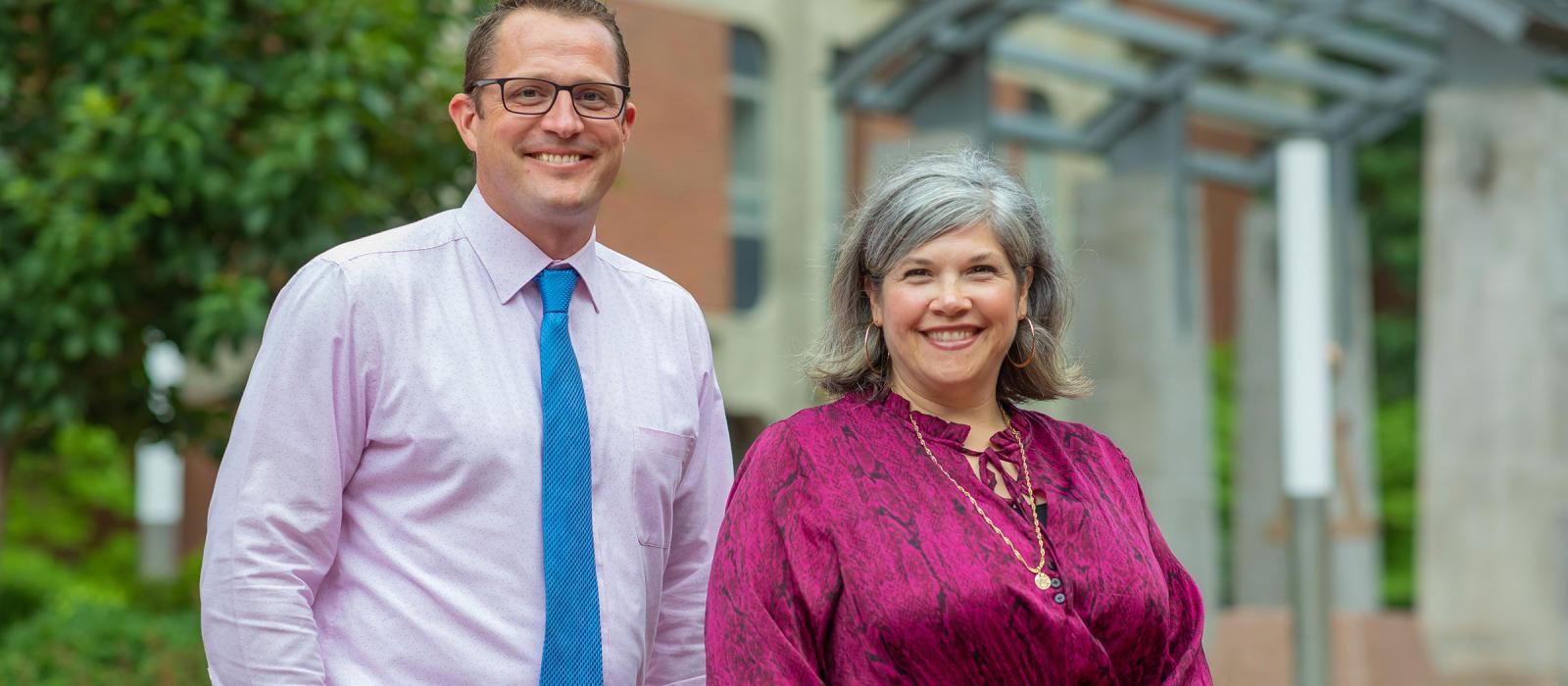
Lindell Ormsbee(Core Leader)
Lisa Gaetke
Anna Goodman Hoover
Stephanie Jenkins
The UK-SRC Research Translation Model
The RTC leverages partnerships with a number of organizations to improve the understanding of environmental health issues across the Commonwealth. Among the key partners helping address SRC concerns are the Kentucky Department for Environmental Protection Division of Waste Management, the Kentucky Cooperative Extension Service, the Kentucky Water Resources Research Institute and the Kentucky Research Consortium for Energy and the Environment (KRCEE).
UK-SRC Research Translation Seminar Series
Archived UK-SRC RTC Presentation for March 31, 2011 NIEHS Risk e Learning Seminar: "Community Engagement Activities at Superfund Sites"
Anyaegbunam, C., Hoover, A.G., and Schwartz, M. (2010). Use of community-based participatory communication to indentify community values at a Superfund site. Providenc, RI: ASCE/EWRI World Environmental & Water Resources Congress 2010.
Bailey, K., Grossardt, T., Ripy, J., and Blandford, B.. (2010.) Casewise Visual Evaluation for high-performance collaborative visioning of PGDP nuclear enrichment plant end state. Providence, RI: ASCE/EWRI World Environmental & Water Resources Congress 2010.
Bhattacharyya, D., Smuleac, V., Lewis, S., Bachas, L., and Ormsbee, L. (2010).Nanotechnology for TCE and PCB dechlorination from water: Nanoparticle synthesis and reactivity. Providence, RI: ASCE/EWRI World Environmental & Water Resources Congress 2010.
Gaetke, L., Hofe, C., Hoover, A.G., Jenkins, S., Ormsbee, L., and Osborne, A. (2008). Hazardous chemicals and your body: Eating right for a healthier you (general audiences booklet). Lexington, KY: University of Kentucky Cooperative Extension Service.
Gaetke, L., Hofe, C., Hoover, A.G., Jenkins, S., Ormsbee, L., and Osborne, A. (2008). Hazardous chemicals and your body: Eating right for a healthier you (detailed document).Lexington, KY: University of Kentucky Cooperative Extension Service.
Grossardt, T., Ripy, J., and Bailey, K. (2010). Use of Structured Public Involvement to identify community preferences for a Superfund site end state vision. Providence, RI: ASCE/EWRI World Environmental & Water Resources Congress 2010.
Hoover, A.G., Anyaegbunam, C., and Ormsbee, L. (2010). Identifying the relationship between citizen values and environmental health: Using Community-Based Participatory Communication in Superfund communities. Portland, OR: Society for Environmental Toxicologists and Chemists Annual Meeting.
Hoover, A.G., and Anyaegbunam, C. (2010). Identity, community, and environmental risk: A dialogic case study. San Francisco, CA: Bridges and Chasms: Exploring the Role of Dialogue in Social Change Miniconference,National Communication Association Annual Convention in San Francisco, CA.
Hoover, A.G., and Cross, A. (2009). Health coverage in Kentucky's community newspapers: Toward a more informed populace. Indianapolis, IN: Priester Extension National Health Conference.
Lewis, S., Lynch, A., Bachas, L., Hampson, S., Ormsbee, L., Bhattacharyya, D., (2009). Chelate-Modified Fenton Reaction for the Degradation of Trichloroethylene in Single and Two Phase Systems,Environmental Engineering Science,26, 1-9.
Meyer, D., Hampson, S., Ormsbee., L., Bhattacharyya, D.B., (2009). A study of groundwater matrix effects for the destruction of TCE using Fe/Pd nanoaggregates.Journal of Environmental Progress and Sustainable Energy,28(4), 507-518.
Ormsbee, L., Anyaegbunam, C., Grossardt, T., Bailey, K., Hoover, A.G., and Schwartz, M. (2009). Integrating participatory communication and structured public involvement processes to better address Superfund issues: The Paducah Gaseous Diffusion Plant Future State Vision Project. (Poster). New York, NY: NIEHS SRP Annual Meeting.
Ormsbee, L., Gaetke, L, Hoover, A.G. (2006). An adaptive model for research translation: Communicating the relationships among toxics, disease, and nutrition. (Poster). Washington, D.C.: EPA Science Forum.
Ormsbee, L., Hampson, S., and Bhattacharrya, D.. (2010). Development of a treatability study work plan for testing nanoparticles at a US DOE Superfund site. Providence, RI: ASCE/EWRI World Environmental & Water Resources Congress 2010.
__________________________________________________________________________
Paducah Gaseous Diffusion Plant Stakehold Engagement Project
Through its partnership with the KRCEE, the UK-SRC Research Translation Core has brought together experts from Community-Based Participatory Communication and Structured Public Involvement to develop an innovative approach for community engagement in determining the future of Superfund sites. The KRCEE team has been charged by Kentucky's Congressional delegation and the United States Department of Energy with integrating public, regulatory, and technical community visions to produce a publicly approved Future State Vision Report for the Paducah Gaseous Diffusion Plant (PGDP) National Priority List Superfund site. The methodology being implemented includes personal interviews, focus groups, and large community meetings, with individuals from disparate stakeholder groups engaged at each stage. The data gathered during the interview and focus group stages is informing the creation of sample scenario visualizations that will be discussed and scored during the community meeting stage. The project has resulted in a PGDP Future State Vision Document that, while not decisional, will be available to inform future US Department of Energy decisions related to the disposition of the PGDP after decommissioning. More detail about this exciting project can be found on the KRCEE project website and at www.paducahvision.com.

Paducah, KY citizens discuss the future of a
nearby NPL Superfund Site