2014
Cytokinin signaling stabilizes the response activator ARR1
Jasmina Kurepa, Yan Li and Jan A Smalle
The Plant Journal, in press
The type-B response regulators are transcriptional factors that promote the expression of cytokinin response genes. Here we shown that ARR1, an abundant and ubiquitously expressed type-B response regulator, exists in the cell both as a stable and as a highly unstable protein. The proteasome-dependent degradation of the unstable ARR1 is inhibited by the cytokinin signal. This is a novel proteasome-dependent mechanism involved in early cytokinin signaling.
Ectopic expression of the phosphomimic mutant version of Arabidopsis response regulator 1 promotes a constitutive cytokinin response phenotype
Jasmina Kurepa, Yan Li, Sharyn E Perry and Jan A Smalle
BMC Plant Biology, 2014, 14:28
We describe comparative analyses of plants overexpressing wild-type ARR1 and phopshomimic ARR1 transgenes. The phophomimic mutation causes a 100-fold increase in response activation and instigated developmental and physiological changes that characterize wild-type plants treated with cytokinins.
2013
Direct isolation of flavonoids from plants using ultra-small anatase TiO2 nanoparticles
Jasmina Kurepa, Ryo Nakabayashi, Tatjana Paunesku, Makoto Suzuki, Kazuki Saito, Gayle E. Woloschak Jan A. Smalle
The Plant Journal [Epub ahead of print]
Anatase TiO2 nanoparticles smaller than 20 nm form strong bonds with molecules carrying enediol and especially catechol groups. We show that these nanoparticles can enter plant cells, conjugate enediol and catechol group-rich flavonoids in situ, and exit plant cells as flavonoid-nanoparticle conjugates
Negatively charged metal oxide nanoparticles interact with the 20S proteasome and differentially modulate its biologic functional effects
Falaschetti CA, Paunesku T, Kurepa J, Nanavati D, Chou SS, De M, Song M, Jang JT, Wu A, Dravid VP, Cheon J, Smalle J, Woloschak GE
ACS Nano, 2013, 7 (9), pp 7759-7772
We show that several types of metal oxide nanoparticles adsorb to the proteasome and preferentialy bind to particular proteasome subunits. These interactions affect 20S proteasome activity.
Reversion of the Arabidopsis rpn12a-1 exon-trap mutation by an intragenic suppressor that weakens the chimeric 5' splice site
Jasmina Kurepa, Yan Li and Jan A. Smalle
Jasmina Kurepa and Jan A. Smalle
We describe the isolation and analyses of suppressor of rpn12a-1 (sor1). The sor1 mutation is intragenic and located at the fifth position of the chimeric intron. This mutation weakens the activated 5' splice site associated with the STOP codon and tilts the processing of the RPN12a mRNA back towards polyadenylation.
Proteasome-dependent proteolysis has a critical role in fine-tuning the feedback inhibition of cytokinin signaling
Jasmina Kurepa, Yan Li, and Jan A. Smalle
Plant Signaling & Behavior, 2013, 18: 8(3)
We show additional data that proteasome-dependent proteolysis of feedback inhibitors such as ARR5 is essential for the maintenance of optimal responsivity and plasticity of cytokinin signaling.
AXR1 promotes the Arabidopsis cytokinin response by facilitating ARR5 proteolysis
Yan Li, Jasmina Kurepa and Jan A. Smalle
The Plant Journal, 2013, 74:13-24
We show that cytokinin resistance of the axr1 mutant involves stabilization of the type-A ARR member ARR5, suggesting that axr1's decreased sensitivity to cytokinins results from the enhanced feedback inhibition mechanism that overrides response activation.
2012
The role of 26S proteasome-dependent proteolysis in the formation and restructuring of microtubule networks
Jasmina Kurepa, Songhu Wang and Jan A. Smalle
Plant Signaling & Behavior, 2012, 7: 1289-1295
We summarize the evidence pointing at the important role of 26S proteasome-dependent proteolysis in the regulation of microtubule synthesis and microtubule dynamics.
SLO2, a mitochondrial PPR protein affecting several RNA editing sites, is required for energy metabolim
Zhu Qiang, Dugardeyn Jasper, Zhang Chunyi, Takenaka Mizuki, Kuhn Kristina, Craddock Christian, Smalle Jan, Karampelias Michail, Denecke Jurgen, Peters Janny, Gerats Tom, Brennicke Axel, Eastmond Peter, Meyer Etienne and Dominique Van Der Straeten
The Plant Journal, 2012, 71: 836-849
2011
Salt stress-induced disassembly of Arabidopsis cortical microtubule arrays involves 26S proteasome-dependent degradation of SPIRAL1
Songhu Wang, Jasmina Kurepa, Takashi Hashimoto and Jan A. Smalle
Plant Cell, 2011, 23: 3412-3427
We examined the relationship between salt stress tolerance and dynamic instability of microtubules, and revealed an important role for protea
some-dependent regulation of microtubule-associated protein SPIRAL1 in the survival of plants challenged by high salinity.
Ultra-small titanium dioxide nanoparticles disrupt micrutubular networks in Arabidopsis thaliana.
Songhu Wang, Jasmina Kurepa and Jan A. Smalle
Plant Cell & Environment, 2011, 34: 811-820 (COVER)
Titanium dioxide nanoparticles disrupt cortical microtubular arrays and alter cell expansion growth. Disruption of microtubules is followed by 26S proteasome-dependent degradation of tubulin monomers and the ubiquitin/26S proteasome proteolysis pathway overload.
Assaying trancription factor stability
Jasmina Kurepa and Jan A. Smalle
Methods in Molecular Biology, 2011, 754: 219-34.
The methods described can be used to test the stability of trancription factors (and other proteins) under a variety of conditions and in different genetic backgrounds.
2010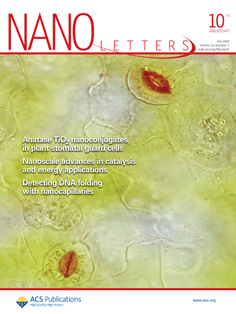
Uptake and distribution of ultra-small anatase titanium dioxide Alizarin red S nanoconjugates in Arabidopsis thaliana
Jasmina Kurepa, Tatjana Paunesku, Stefan Vogt, Hans Arora, Bryan M. Rabatic, Jinju Lu, M. Beau Wanzer, Gayle E. Woloschak and Jan A. Smalle
Nano Letters, 2010, 10: 2296-2302 (COVER)
The ultrasmall anatase titanium dioxide nanoconjugates traverse cell walls, enter into plant cells, and accumulate in specific subcellular locations. Optical and X-ray fluorescence microscopy coregistered the nanoconjugates in cell vacuoles and nuclei.
Arabidopsis sensitivity to protein synthesis inhibitors depends on 26S proteasome activity
Jasmina Kurepa, Consolee Karangwa, Liliana Sfichi Duke and Jan A. Smalle
Plant Cell Reports, 2010, 29: 249-259
The Arabidopsis 26S proteasome mutants (e.g., rpt2a-3, rpn10-1 and rpn12a-1) are hypersensitive to translation inhibitors hygromycin B and cycloheximide, and tolerant to glutamine synthase inhibitor BASTA (PPT). The combination of hygromycin B, cycloheximide and BASTA growth-response assays can be used as a diagnostic tool to detect altered 26S proteasome function in plant mutants and transgenic lines.
2009
The Arabidopsis 26S proteasome subunit RPN1a is required for optimal plant growth and stress responses
Songhu Wang, Jasmina Kurepa and Jan A. Smalle
Plant & Cell Physiology, 2009, 50: 1721-1725
Plants lacking non-ATPase regulatory subunit 1a (RPN1a) are viable and have increased cell sizes, decreased heat shock and salt stress tolerance, and increased oxidative stress tolerance.
Proteasome regulation, plant growth and stress tolerance
Jasmina Kurepa, Songhu Wang, Yan Li and Jan A. Smalle
Plant Signaling & Behavior,2009, 4: 924-927.
A review in which we discuss an intriguing possibility that 26S and 20S proteasome activities are regulated to control plant development and stress responses
Loss of 26S proteasome function leads to increased cell size and decreased cell number in Arabidopsis shoot organs
Jasmina Kurepa, Songhu Wang, Yan Li, David Zaitlin, Andrew J. Pierce and Jan A. Smalle
Plant Physiology, 2009, 150: 178-189
Optimal proteasome function is required to maintain final shoot organ size in Arabidopsis. Loss of function of the subunit regulatory particle AAA ATPase (RPT2a) causes a weak defect in 26S proteasome activity and leads to an enlargement of leaves, stems, flowers, fruits, seeds, and embryos. These size increases are a result of increased cell expansion that compensates for a reduction in cell number.
The RPN5 subunit of the 26S proteasome is essential for gametogenesis, sporophyte development, and complex assembly in Arabidopsis
Book A. J., Smalle J., Lee K.-H., Yang P., Walker J.M., Casper S., Holmes, J.H., Russo, L.A., Buzzinotti Z.W., Jenik P.D., and Vierstra, R.D
The Plant Cell, 2009, 21: 460-478.
2008
To misfold or to lose structure? Detection and degradation of oxidized proteins by the 20S proteasome
Jasmina Kurepa and Jan A. Smalle
Plant Signaling & Behavior, 2008, 3: 386-388.
We suggest that protein oxidation induces the formation of unstructured regions that serve as targeting signals for 20S proteasome-dependent proteolysis.
26S proteasome regulatory particle mutants have increased oxidative stress tolerance
Jasmina Kurepa, Akio Toh-e and Jan A. Smalle
The Plant Journal, 2008, 53: 102-114
Plant cells increase 20S proteasome-dependent proteolysis when 26S proteasome activity is impaired. One of the consequences of the 26S/20S activity shift is an increase in oxidative stress tolerance and decrease in tolerance to heat shock.
Structure, function and regulation of plant proteasomes
Jasmina Kurepa and Jan A. Smalle
2007
Ubiquitin C-terminal hydrolases 1 and 2 affect shoot architecture in Arabidopsis
Yang P., Smalle J., Lee S., Yan N., Emborg T.J., Vierstra R.D.
The Plant Journal 2007, 51: 441-457
All publications:

© 2007 Smalle Lab
University of Kentucky, CAFE
Page Last Modified: February 6, 2014