Biodiversity
What is Biodiversity?
ÔThe total variability of life on earthÕ
Ecological Diversity:
Ônumbers of species in
given areasÕ
Genetic Diversity
Ôvariation within and
variation between populations of animals measured in variation between genes or
DNA sequencesÕ
why do we care?
a.
beauty of biodiversity, spice of life, children develop
better when exposed to greater diversity,
both microbiological and psychologically.
b.
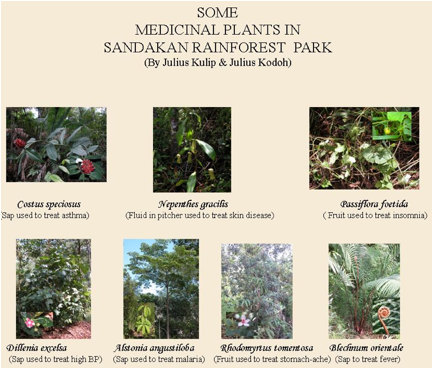
Lifeforms provide important sources for new types of
medicines, fibers, materials: losing biodiversity means also a loss in access
to important biologically active compounds
i.
25% plant based
medicines currently in use
c.
Genetic diversity
in crop plants and diversity in number of crop plants includes the stability of
both global and local food sources, by, for instance, protecting populations
from diseases.
d.
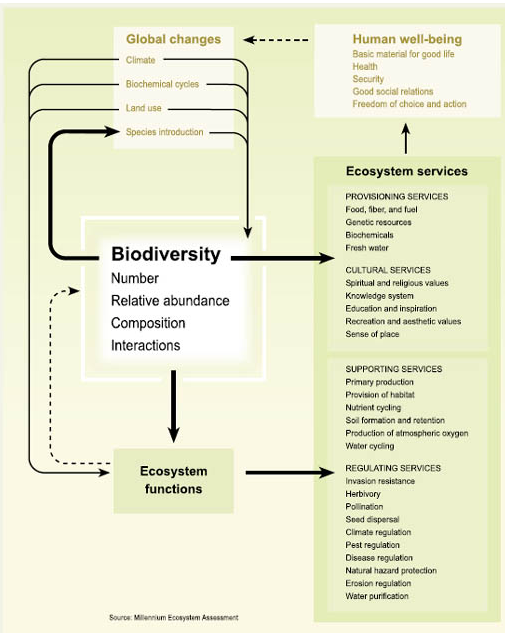
Biodiversity
provides other important environmental services such as, for example, carbon
sequestration and water capture.
e.
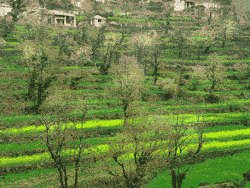
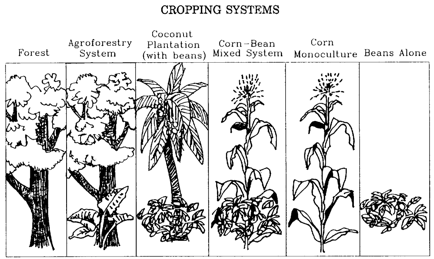
Biodiverse crop plantations increase total productivity by 10%
by making better use of space: polycultures
f.
lack of knowledge: organisms are integrated into a very
complex chain of being that we have not deciphered (nor are we likely to do so
anytime soon)
g.
moral: no reason not to preserve existing diversity of
life, there is plenty of food, fiber, and other items without expanding
acreages under cultivation or stripping old-growth forests, or drilling new oil
wells
ii.
how do we measure biodiversity?
a.
Uncertainty is a
central problem
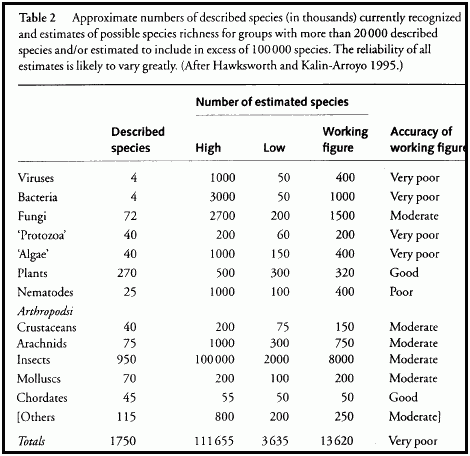
Numbers of species
1.75 million species scientifically identified.
estimated 30 million species on earth.
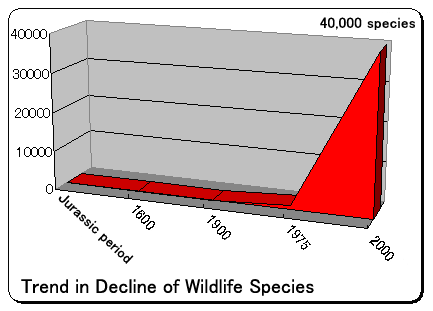
estimated 40,000 species rendered extinct annually.
b.
what does ÔbiodiverseÕ mean in practice? example: different varieties of white oak
versus different species of oaks
versus different genera
c.
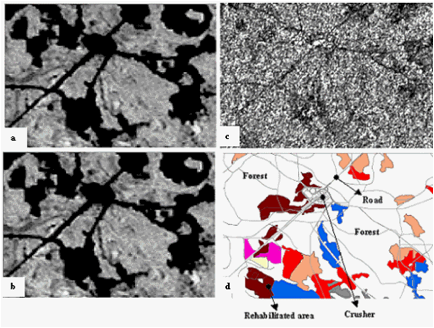
Issue 1: scale of
measurement: size of the sample area
i.
frogs versus bears; oaks versus lilies
ii.
evenness versus dominance
iii.
patch type, dimension, geometry
d.
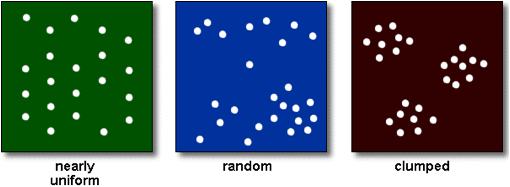
Issue 2:
Distribution of populations and sampling problematic
e.
Issue 3: unit of
analysis: population? gene pool? Clade?
Genera? What is the appropriate unit for biodiversity analysis?
f.
Issue 4:
Convention on Biodiversity: the US is supposed to measure biodiversity, but has
limited funds for the US Biological Survey and HAS NOT signed the international
Convention on Biological Diversity. This has been attributed to an
administration unwillingness to fund a program which
would almost certainly find new species that would then be subject to
protection under the Endangered Species Act.
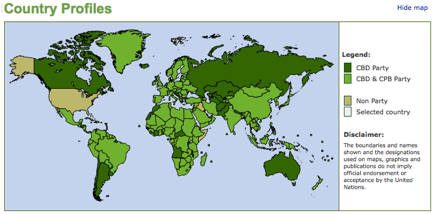
It takes money to measure biodiversity:
Where does Biodiversity come from?
iii.
coevolutionary relationships: mutualism, symbiosis,
iv.
allopathy
v.
patchiness in landscape ecology
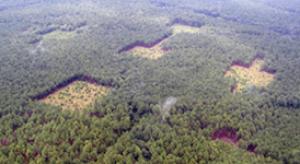
a.
landscape biodiversity
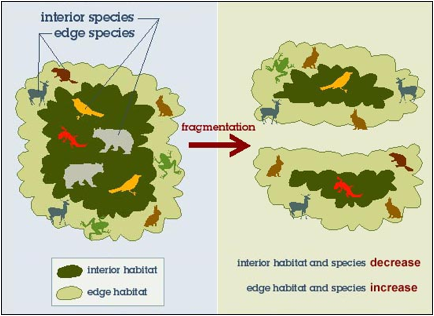
b.
alpha biodiversity
c.
rollover biodiversity
d.
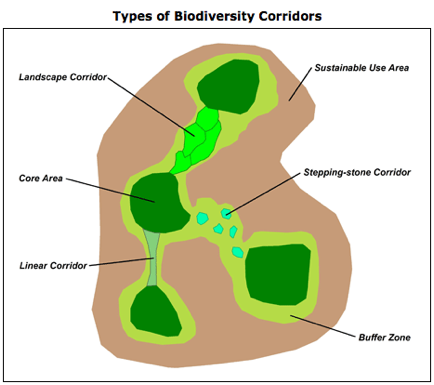
is there information in a landscape, and if so how
structured?
e.
trails, movements of animals and plants, seed dispersals
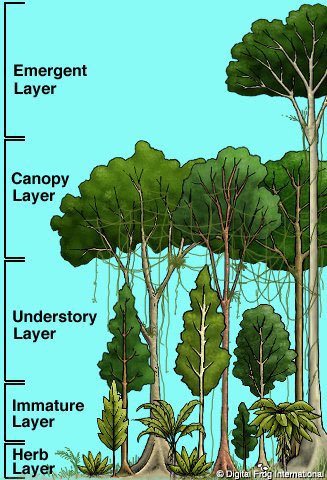
vi.
Niche complexity
within a patch
vii.
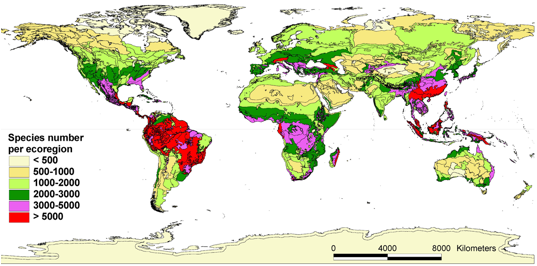
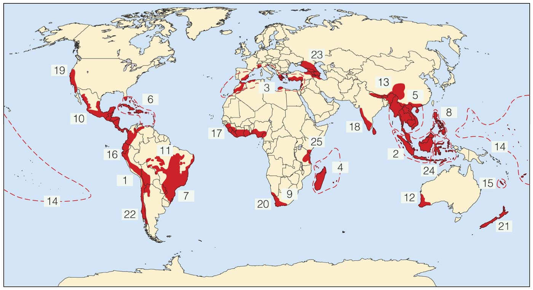
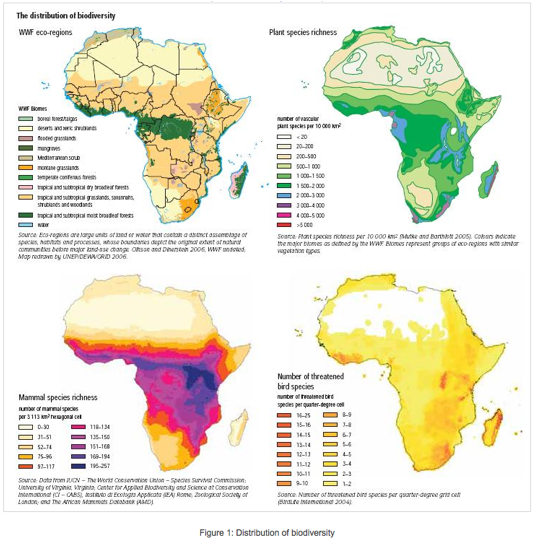
biodiversity hot spots
a.
what causes a Ôhot spotÕ?
viii.
species loss rates
a.
absolute loss
b.
rates of loss
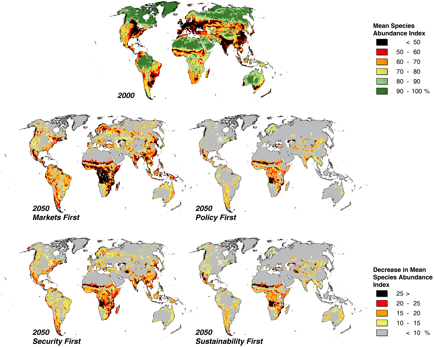 MAP:
Biodiversity loss: state and scenarios 2006 and 2050.
MAP:
Biodiversity loss: state and scenarios 2006 and 2050.
greatest losses rank order: Markets First, Security First,
Policy First Sustainability First. differences among
the regions:
broad-scale land-use changes, especially pastureland and biofuel production infrastructure development,
pollution
climate change,
public policy and conflict
http://www.unep.org/geo/geo4
/ http://www.globio.info/region/world/
c.
differing across social contexts and geographically
d.
differing by patch utilization: some areas are more amenable,
systematically more amenable, to human exploitation
ix.
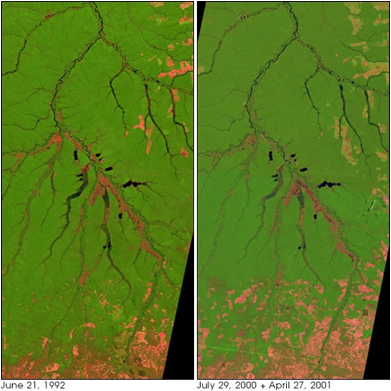
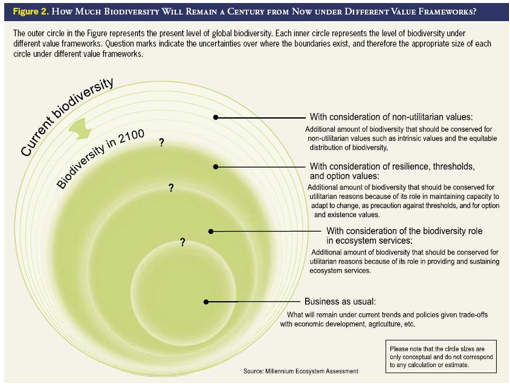
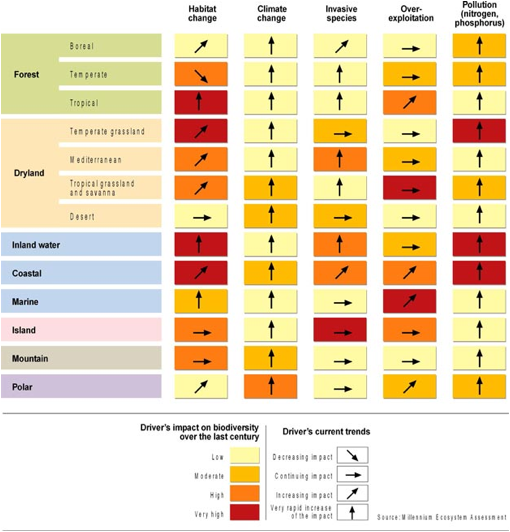
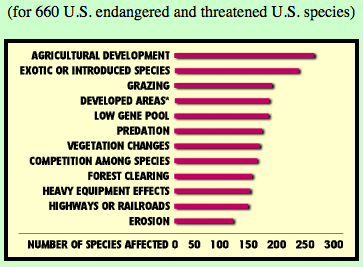
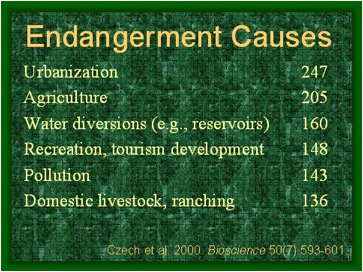
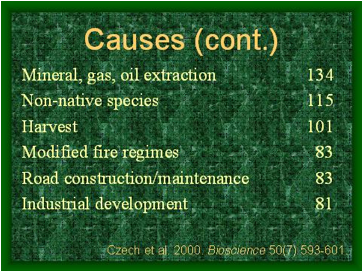
Causes of
Biodiversity Loss
a.
Proximate causes
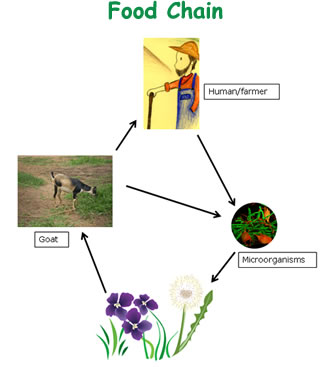
(graphics problems)
First: some very poor
graphics
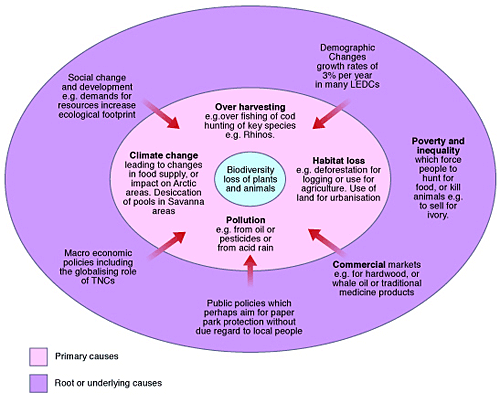
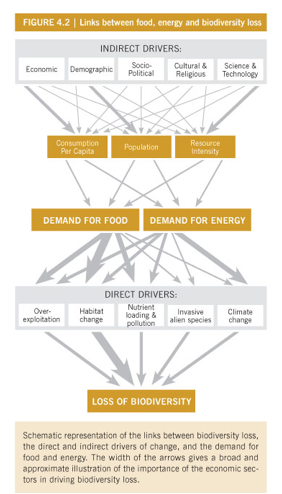
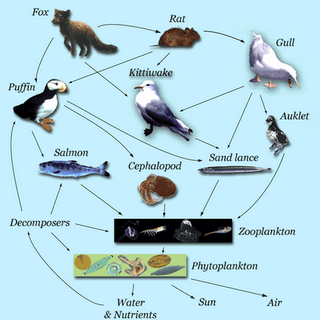
Clear but boring graphics
b.
background causes
i.
consumption of energy and resources
1.
increasing affluence
2.
lack of sustainable planning or policies
3.
population growth
ii.
wastes:
1.
toxics,
2.
CO2,
3.
erosion
iii.
unmediated globalization
1.
exotic species invasions
2.
hot spot development (see i.2 above)