Biography
Doreen Maloney is an interdisciplinary artist and Professor of Art at the University of Kentucky. Working across installation and moving-image practices, her work explores how memory, identity, and collective interior experience take spatial and time-based form. Through immersive environments and film, she examines authorship, voice, and the unseen frameworks that shape perception.
Her projects have been presented internationally in galleries, museums, and experimental venues. Drawing on a background in dance, interarts and technology, language studies, history and fine arts, her practice moves between embodied experience and mediated forms, investigating how fragile materials and contemporary technologies hold emotional resonance. She lives and works in Lexington, Kentucky.
Artist Statement
My work explores how people create meaning in the spaces between presence and absence, memory and imagination, certainty and uncertainty. Drawing on a range of materials, images, sounds and spatial realationships, I create environnments that invite viewers to slow down, reflect, and inhabit moments of wonder, ambiguity, and transition.
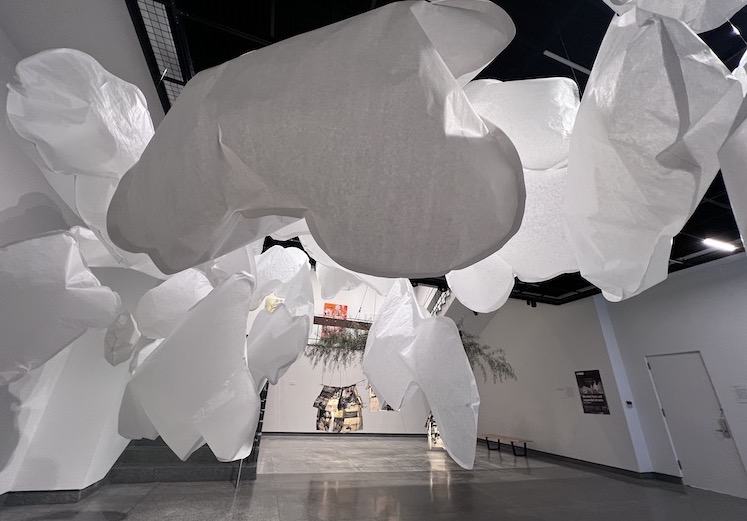
Many of my projects begin with experiences that resist easy language: grief, dreams, displacement, technological mediation, and the search for home. Using fragile materials such as paper, fabric, light, and air, I transform these intangible experiences into physical encounters. Houses become states of mind. I am interested in how atmosphere can carry emotion. Light, shadow, and translucent materials allow things to appear and disappear, suggesting what is absent even as it remains present.
Projects such as Lantern House and Spirit House investigate shelter, belonging, and recovery through immersive architectural forms. Other works, including Memory in Morse and A Robot Contemplates Suicide, explore communication across distance, absence, and increasingly mediated forms of experience. More recent projects, including Someone Else's Dream, Personal Weather, and The Dawn is Always Possible, create contemplative spaces where private experiences become shared encounters.
Across media, I am interested in creating places rather than objects. Influenced by long-term contemplative practice, I see art as an opportunity to pause within an increasingly accelerated world. I am drawn to experiences that resist being mapped. Dreams, memories, and moments of wonder often exceed language and evade easy interpretation. I find myself returning to what has been lost: places, people, versions of myself, dreams, and ways of understanding the world. The work is less an attempt to recover them than to sit with their lingering presence. Rather than offering answers, my work creates spaces for attention, reflection, and wonder, inviting viewers to dwell, however briefly, within the richness and uncertainty of the present moment.